
Screen-Free Science Fun For The September Holidays


The school bag comes home a little lighter in September, and by the second morning of the break, the first question tends to arrive with breakfast: what are we doing today? For lower primary parents, that stretch between term openings is both a gift and a small logistical puzzle, especially when everyone in the family is trying to spend a bit less time on a screen.
The good news is that science makes an easy holiday companion. A P1 to P3 child is at the age where curiosity is loud, patience is short, and the best activities are the ones that take fifteen minutes to set up, use things already in the kitchen, and leave a memory the child can bring up over dinner. Below are a few ideas that fit a real family week, along with some guardrails so the fun stays safe. If your family would rather balance a couple of home mornings with a proper hands-on session, this is also the time of year we run our seasonal primary science workshops, which we mention again at the end.
Start With What Is Already In The Kitchen
Some of the best home science needs nothing more than a mixing bowl and a bit of adult attention. Younger children in particular respond well to activities that mirror what they see in school worksheets on materials, water, and living things, because the connection between paper and real life clicks quickly.
A classic to reach for is the sink-or-float tray. Fill a large basin halfway with water, then set out a small collection of household objects: a plastic spoon, a paperclip, a lemon, a bottle cap, a piece of foil, a wooden peg. Ask your child to predict before each dunk, and to explain the guess. The point is not the right answer. It is the habit of forming a hypothesis, testing it, and updating the guess. That habit sits underneath every open-ended question in the Primary Science paper.
A second short activity works well for the same age group: colour mixing with food dye and clear cups of water. Two drops of blue and two drops of yellow, stirred slowly, is a small piece of magic to a P1 child. If your child is P3 and a bit older, you can push it into a chart of colour combinations and get an early feel for what fair testing looks like.
Take The Science Outside
The September break is a good time to swap the desk for a walk. Singapore's parks and nature reserves are quieter on weekdays, and you can pack a whole afternoon of learning into a two-hour visit if you go with a small prompt in mind.
A garden or a stretch of the Southern Ridges gives your child leaves to compare, insects to spot, and shade to notice. Ask them to find three leaves with different shapes and one plant with a flower. That single instruction covers observation, classification, and vocabulary all in one go. Follow up at home by pressing one of the leaves between two pieces of kitchen paper under a heavy book.
If you want a structured stop somewhere air-conditioned, the Science Centre Singapore has weekday sessions that suit lower primary, and the National Library Board runs free storytelling and craft slots through its Holiday Fun programmes. Both are gentle on the schedule and easy to pair with a lunch out.
Try One Kitchen Experiment, Safely
Older lower primary children love an experiment that fizzes, changes colour, or grows. The trick is choosing one that stays safe, and being clear on the boundary between playful and reckless.
Try the classic bicarbonate-of-soda-and-vinegar volcano in a shallow tray, with your child wearing a pair of swimming or safety goggles and standing back to watch. The reaction is dramatic enough to be fun, mild enough to be safe, and gives your child a chance to see a chemical change with their own eyes. It also opens the door to a real conversation about why you should never mix household cleaning products at home, since not every reaction is friendly. Keep the activity supervised, keep sharp edges and hot surfaces out of reach, and clear the tray away when the fun is done.
Skip anything that asks for a naked flame near hair or loose sleeves, anything sealed under pressure, and anything that involves eating or drinking the result. If an idea from the internet needs a longer safety paragraph than it does an instruction, choose something else. Curiosity survives a boring safety chat far better than it survives an accident.
Keep A Small Science Notebook
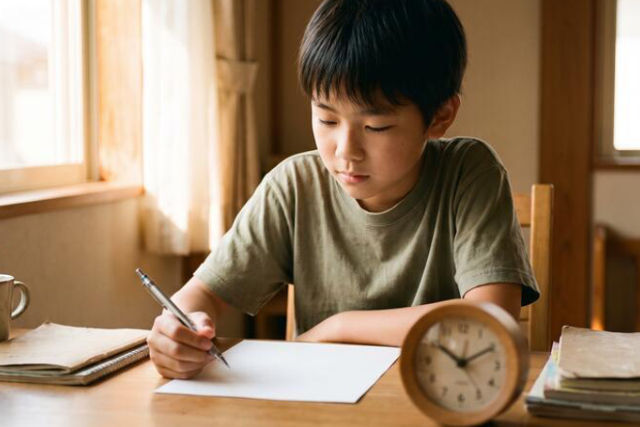
By around P2 or P3, children can begin to keep a light record of what they see. A simple A5 notebook works well: one page per activity, a title, a two-line prediction, a rough sketch, and a sentence about what happened. There is no need for it to be tidy or graded. The habit is what carries into upper primary, where writing an observation cleanly under exam conditions is often the difference between a good mark and a great one.
You can build on this idea across the week without turning it into a chore. A short list of prompts is enough:
1. Watch a bean sprout in a wet cotton pad and sketch the changes each morning
2. Note down which of four ice cubes on different plates melts first, and why
3. Try floating an egg in salted water and add salt one spoon at a time
4. Time how long a paper aeroplane stays in the air with two different wing shapes
Four prompts, five minutes of writing each, and you have a small home portfolio your child can flip through when the term restarts.
Plan One Anchor Activity For The Week
Days with nothing on them tend to disappear. One planned anchor per week gives the holiday a rhythm without booking every hour. A trip out, a longer experiment at home, or a place on a hands-on session at a tuition centre can all serve this purpose.
Heuristics Science runs seasonal holiday sessions during the school breaks that are designed for exactly this window. They pair short, guided experiments with age-appropriate concept work, and they give a young child a small change of scene without a full-day commitment. Weekly slots and workshop line-ups shift through the year, so check what is running before making any plans firm.
Across the articles we have written before, one of the most useful for parents is the list of low-fuss educational activities children can do over the holidays. It works well as a backup on a rainy day, and pairs neatly with the ideas above.
Conclusion
A screen-free September holiday does not need to be ambitious. Fifteen minutes at the sink, an afternoon in a park, one gentle experiment, and a small notebook to keep it all together will carry a lower primary child through the week and leave them a little more curious than they started. If your child would enjoy a bit more structure alongside the free time, our team at Heuristics Science would be happy to share what our holiday classes look like this month.



Comments