
Primary To Secondary Science Gap: What Students Struggle With

Updated: Jan 19

The move from primary school to secondary school often feels bigger than expected. Subjects that once felt manageable suddenly seem more demanding, with new terms, faster lessons, and higher expectations from teachers. For many students, science is one of the subjects where this change is felt most strongly.
Primary science focuses on broad ideas and everyday observations, while secondary science starts to zoom in on details, accuracy, and structured thinking. It’s normal to feel lost at the beginning, especially when lessons move quickly, and classmates seem to “get it” faster. The good news is that struggling at the start doesn’t mean you’re bad at science. It usually means you’re still adjusting to how science is taught and tested at a higher level.
Why secondary science feels so different
One major reason the gap feels wide is the shift in how topics are taught. In primary school, science lessons often revolve around familiar situations, like plants growing or simple experiments. Teachers guide students closely, and answers don’t always need to be very detailed.
Secondary science introduces a more technical style. Topics are broken into physics, chemistry, and biology concepts, even if they’re still taught together at lower secondary. You’ll start seeing formulas, scientific terms, and explanations that must be precise. Marks aren’t just given for the final answer, but also for how clearly you explain your thinking.
This change can feel overwhelming at first, especially if you’re used to writing shorter answers.
More content, less hand-holding
Another challenge is the amount of content covered. Lessons move faster, and teachers may not revisit topics as often. You’re expected to remember what was taught last week and build on it quickly.
There’s also less step-by-step guidance during lessons. Teachers explain concepts, demonstrate examples, and then expect students to practise on their own. If you don’t clarify doubts early, small misunderstandings can pile up and turn into bigger problems later. This is why time management and consistent revision become far more important in secondary school than before.
New expectations in answering questions
One common struggle for secondary students is answering open-ended questions. In primary school, answers could be shorter and still score marks. In secondary science, explanations must follow scientific logic and use the right terms.
You may know the idea in your head, but lose marks because your answer is vague or incomplete. Learning how to structure explanations clearly becomes just as important as understanding the content itself. This is often where students feel frustrated, because they “studied” but didn’t get the marks they expected. Over time, practising structured answers helps build confidence and improve results.
Experiments feel more serious
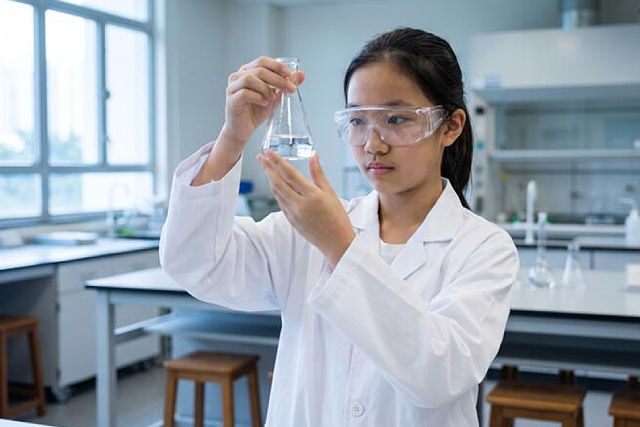
Science practicals also change in secondary school. Experiments are no longer just about fun observations. You’re expected to understand variables, fair testing, accuracy, and safety rules.
Questions might ask why a step is done in a certain way, or how results can be made more reliable. If you’re not used to thinking deeply about experiments, this can feel confusing at first. With practice, though, these skills become more natural and even enjoyable. Practical skills are closely linked to theory, so understanding one helps strengthen the other.
From memorising to understanding
In primary school, memorising key facts might have been enough. Secondary science requires a deeper understanding. You’re expected to explain why something happens, not just state what happens.
For example, instead of saying “metal conducts electricity,” you may need to explain how electrons move within the metal. This shift can be tough, but it’s also what makes science more interesting and meaningful.
At this stage, lower secondary students should master core topics so that future chapters feel less intimidating and more connected.
Feeling discouraged is common, but temporary
Many students feel discouraged when their first few science test results aren’t great. This can lead to self-doubt and a loss of interest. It’s important to remember that early struggles are part of the adjustment process.
Secondary school science is a new environment, and it takes time to adapt. Asking questions, revising regularly, and learning from mistakes all play a role in improvement. Progress might feel slow at first, but small improvements add up over time.
How extra support can help
Some students benefit from extra guidance outside school. The right secondary science tuition can help bridge gaps by revisiting concepts at a comfortable pace and explaining them in simpler ways. It also gives students a safe space to ask questions they may hesitate to ask in class.
Good guidance focuses on building understanding, not just drilling answers. When students know why they’re learning something, they’re more likely to remember it and apply it correctly in exams. Confidence often grows alongside clarity, which helps students enjoy science more.
Building better study habits early
Adapting to secondary science isn’t just about intelligence. It’s also about habits. Reviewing notes weekly, clarifying doubts early, and practising questions regularly make a big difference.
Learning how to organise notes, summarise chapters, and reflect on mistakes helps science feel less overwhelming. These habits also prepare students well for upper secondary levels later on. Science becomes far less stressful when you feel prepared and supported.
Conclusion
The primary to secondary science gap may feel intimidating, but it’s not impossible to overcome. With time, practice, and the right strategies, concepts start to make sense, and confidence slowly builds.
Heuristics Science supports students through this transition by offering primary and secondary science tuition in Singapore. We help students understand concepts clearly, answer confidently, and grow steadily in their science journey.



Comments